

Choose Your Master
what to do when you can’t trust yourself at 2am

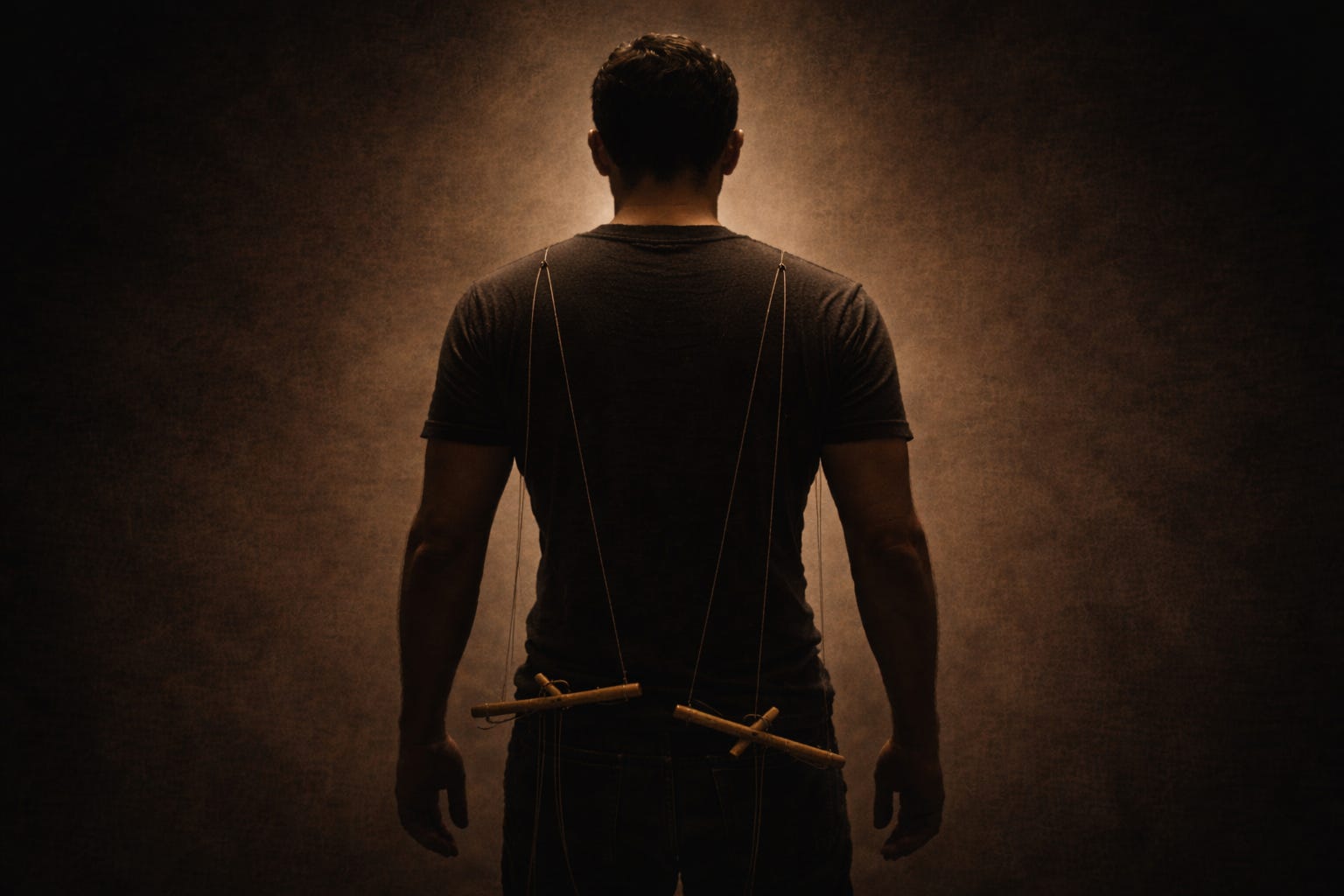
It was all good, until it wasn’t.
After eight months of keeping some of my demons out of my life, I gave in again. Not for long — I caught it quickly, reversed what I could, and shut the door almost as soon as I opened it.
But these things don’t need much.
A single lapse is enough to crush the self-esteem and sense of control you built while they were gone, and leave you with a scar the size of your regret.
I got up fast. But it still cost me things I couldn’t afford to lose.
For eight months, I had convinced myself that I had changed. That I had become stronger. That enough time had passed for me to handle it now — to engage with it, in moderation.
Famous last words.
The problem was never that I didn’t know better. I’ve always known the consequences. I’ve always understood the cost — financial, emotional, relational. The effect it has not just on me, but on my family. On our future.
The problem is that knowledge doesn’t decide.
Not at 2am. Not when you’re tired. Not when your mind is idle and the impulse shows up and it is so easy to give in.
In those moments, what we like to call a decision is often just the rationalisation of something that’s already taken over.
And I’ve come to accept something uncomfortable:
I cannot trust myself to choose well in the moments where it matters most.
Not because I’m irrational — but because my rationality isn’t always the loudest voice in the room.
For eight months, the voice never really died. It just went quiet.
Not because I defeated it — but because I removed its ability to act. There was no direct path between impulse and behaviour. No access. No immediate way to turn a passing thought into a costly decision.
So I mistook the absence of opportunity for the presence of strength.
Until I opened the flank. And in that moment, the entire chain snapped back into place: impulse, action, cost, regret.
All the journaling, all the goals, all the motivation — none of it was strong enough to interrupt it once access existed again. I was guarded by domino pieces, believing they would protect me from a wrecking ball.
As the dust settled, a conclusion started to emerge:
Maybe freedom — at least the way we think about it — isn't available to us when we need it most.
We like to believe the goal is to become the kind of person who can be exposed to temptation and simply decline. Who relies on willpower and rationality in every context.
But our most consequential behaviours don’t happen in the realm of calm, deliberate thought. They happen when we’re anxious, bored, overwhelmed, or alone — when the mind has nothing better to do. In those states, choice is a weak mechanism.
So the alternative might not be to become free.
It might be to choose what controls you when you’re not.
Over time, I’ve started to think of my worst habits as masters. They give orders. They show up uninvited. They override intention. And when the environment allows it, they get their way.
The only period in which they don’t dominate is when something else takes their place — something louder, more immediate, something that occupies the same mental territory.
Which brings me to an uncomfortable idea: I may not be capable of having no master.
But I might be able to choose a better one.
Some masters contract your life over time. They reduce your options, drain your energy, make your future self more fragile. Others — while still demanding — expand it. They build skill, improve health, open doors instead of closing them.
The difference isn’t that one leaves you free and the other doesn’t. It’s that one makes your future self more capable, and the other makes him less so.
In 2019, I started taking cold showers.
At the time, it required effort. A decision every single day to do something uncomfortable instead of reaching for warmth. Now, years later, I don’t think about it at all. I don’t wake up and decide. I just take a shower.
Somewhere along the way, the behaviour moved from the domain of decision into the domain of the automatic. It stopped being something I should do and became something I do. No willpower required. No internal debate.
That’s the shift I’m trying to make elsewhere.
You don’t defeat a harmful habit with discipline. You do it by building a different one — something that occupies the same time, the same attention, the same idle moments where the mind goes looking for something to do.
If I’m going to be controlled by something, I’d rather it be by a habit that expands my future than by the possibility of slipping into one that contracts it.
So instead of hoping I’ll make better decisions, I’m trying to make fewer decisions altogether. To install habits strong enough that they show up before anything else does. To repeat them until they stop feeling like choices.
Writing every day. Training regularly. Even when I don’t feel like it. Especially when I don’t feel like it. Not because I trust my motivation to last — but because I don’t.
The goal isn’t to become someone who always chooses correctly.
The goal is to become someone for whom certain choices are no longer available.
And eventually, no longer missed.
If I wake up at 2am, I don’t want to rely on making the right decision.
I want the decision to already be made.